

In a world where information spreads instantly, fake news has become a real weapon of manipulation. It influences public opinion, causes panic, and even shapes political decisions. How can you avoid falling victim to misinformation? Let’s break down the essential fact-checking tools.
1. What Is Fake News and Why Is It Dangerous?
Fake news is deliberately false information disguised as truth. It comes in different forms:
Manipulated context (real photos or quotes taken out of their original setting).
Completely fabricated stories (sensational claims with no evidence).
Misleading headlines (clickbait) – when the content doesn’t match the title.
Why is it dangerous? Triggers panic (e.g., fake reports about disasters or epidemics). Influences elections and social movements. Fuels hatred between groups of people.
2. How to Verify the Source
The first rule is never to blindly trust any piece of information. Signs of a Reliable Source:
 Reputable media (BBC, Reuters, AP, Ukrinform, Radio Free Europe). Transparency – the website lists authors, contacts, and editorial policies. Track record – has the outlet been caught spreading fake news before?
 Red Flags:
 Suspicious website names (e.g., UkraineNews24.co instead of Ukrinform). No contact details or information about the editorial team. Excessive ads and clickbait headlines.
3. How to Check the Author
Even trustworthy media can make mistakes, so it’s important to see who wrote the article. What to Look For: Is the author’s name listed? Do they have social media profiles or other publications? Does the account seem fake? (Check via Twitter/X, LinkedIn).
If the author is anonymous or the profile looks suspicious, seek confirmation from other sources.
4. Cross-Checking with Other Sources
If only one website is reporting a story, that’s a red flag. Where to Find Confirmation?
Official statements (government websites, police reports, presidential office).
International media (BBC, DW, The Guardian).
Fact-checking platforms (StopFake, VoxCheck, FactCheck.ua).
If no credible source confirms the news, it’s likely fake.
5. Analyzing Dates and Context
Fake news often uses:
Old photos/videos (e.g., footage from past protests passed off as new).
Wrong dates (an event may have happened years ago). How to Verify? Google Images (reverse image search). TinEye (finds the original image). YouTube videos (check upload date).
6. Verifying Photos and Videos
Modern technology allows for deepfakes, but tools to detect them are also improving. How to Check Media?
Google Reverse Image Search – finds the original image.
InVID (browser extension) – analyzes videos for manipulation.
Forensically – detects photo editing.
7. Pay Attention to Language and Style
Fake news often has these traits: Overly emotional language (“SHOCKING!”, “URGENT!”).Excessive capitalization and exclamation marks.Vague wording (“some say,” “everyone knows”).
Real journalists avoid such tactics.
8. Fact-Checking Websites – Your Allies
If in doubt, consult professional fact-checkers:
StopFake (stopfake.org)
VoxCheck (voxcheck.voxukraine.org)
FactCheck.ua
Google Fact Check Explorer
Conclusion: 4 Steps to Avoid Fake News
Don’t share immediately – verify first.
Check the source – is it reputable?
Look for confirmation – is this reported elsewhere?
Use fact-checking tools (Google Images, fact-checking sites).
Your vigilance is the best defense against misinformation!

{{current_weather.dt | momentjs( atts.date )}}
{{current_weather.temp | temp}} °{{units}}
{{day.dt | momentjs(atts.date)}}
{{day.temp | temp}} °{{day.temp_min | temp}} °{{units}}
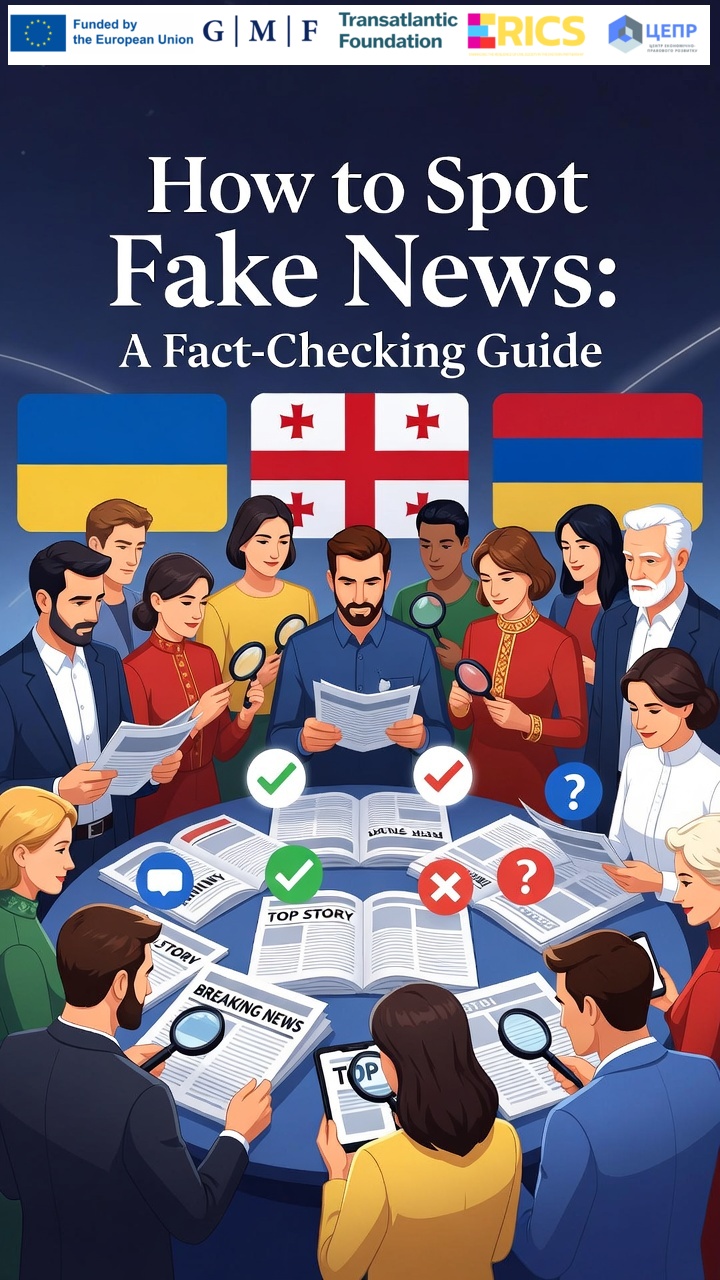
How to Spot Fake News: A Fact-Checking Guide





The website was created with the financial support of the European Union and the Black Sea Trust for Regional Cooperation.

Discussion about this post