

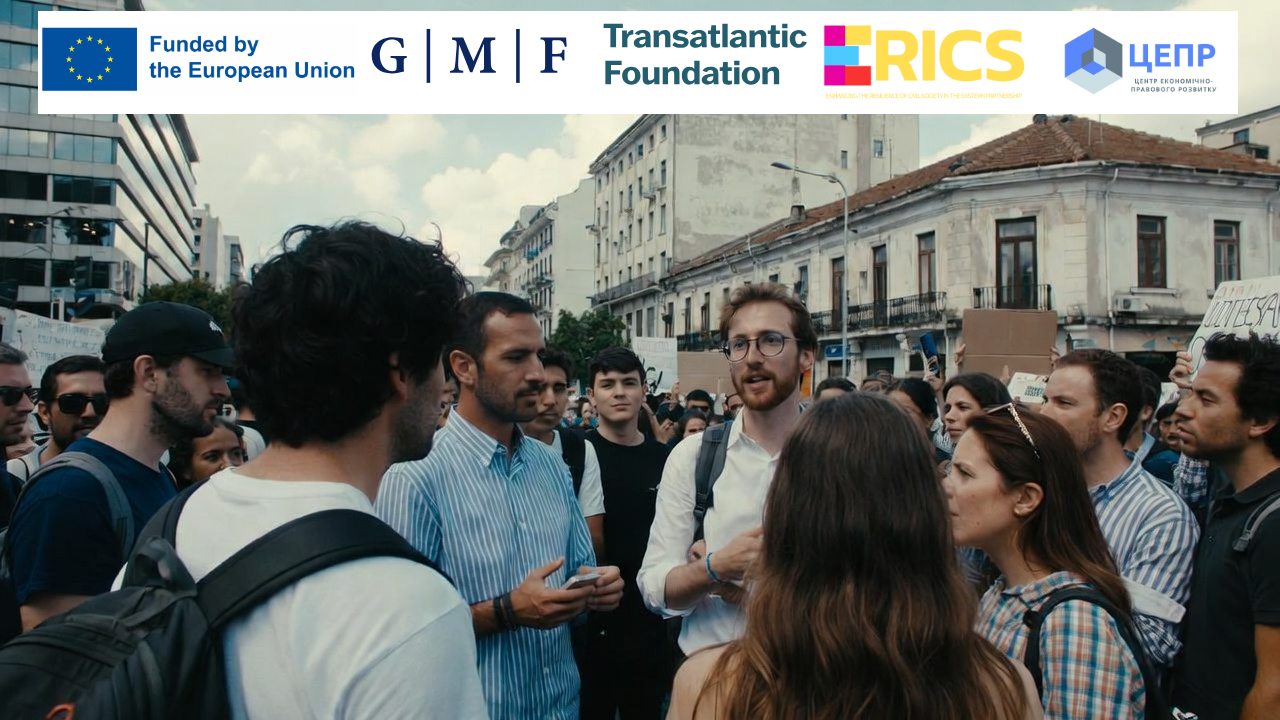
Freedom of speech is not just a right but also a tool that enables society to hold power accountable, expose corruption, and defend democratic values. In Ukraine, Georgia, and Armenia—countries that have traveled a difficult path from authoritarianism toward a European future—the struggle to protect free speech holds particular significance. Civil society in these nations has repeatedly served as the primary bulwark against censorship and repression.
Why Is Freedom of Speech Crucial for Ukraine, Georgia, and Armenia?
1. Free Press as a Check on Authoritarianism
In Georgia during Saakashvili’s presidency (2004–2013), significant progress was made in fighting corruption, but accusations of pressuring independent media also emerged. After his departure, Georgian journalists and activists continued their fight for media independence, and today, a free press remains key in countering pro-Russian influences.
In Ukraine, following the 2014 Revolution of Dignity, the media landscape expanded significantly, yet oligarchic influence persists. Investigative outlets like Bihus.Info, Schemes, and Slidstvo.Info have exposed high-level corruption, demonstrating the critical role of independent journalism.
In Armenia, media freedom improved after the 2018 Velvet Revolution, but after the 2023 defeat in the Karabakh war, authorities began cracking down on critics. Civil activists and independent media, such as Hraparak, continue defending the right to unbiased information.
2. Civil Activism as the Engine of Democracy
In all three countries, civil society has been the driving force behind change:
In Ukraine, the 2004 Orange Revolution and 2014 Maidan protests proved that only united resistance can halt authoritarian tendencies.
In Georgia, mass demonstrations in 2023 forced the government to retract the “foreign agents” law, which threatened NGOs.
In Armenia, the 2018 protests led to a peaceful transfer of power, but after the Karabakh defeat, civil society mobilized again to counter revanchist narratives.
3. Cyberattacks, Propaganda, and Information Security
Russia actively uses disinformation to undermine democracy in the region. Ukraine, Georgia, and Armenia face:
Propaganda through pro-Kremlin media outlets;
Cyberattacks on independent news sites (e.g., attacks on Ukrainska Pravda);
Fake news designed to fuel social conflicts.
In response, civil society has created alternative information platforms:
Ukraine: StopFake, Detector Media;
Georgia: Myth Detector;
Armenia: Fact Investigation Platform.
Conclusion: Freedom of Speech Is Democracy’s Shield
The experiences of Ukraine, Georgia, and Armenia demonstrate that without a free press and an active civil society, reforms are impossible. Each of these countries faces attempts to restrict free speech, but it is the collective efforts of journalists, activists, and ordinary citizens that safeguard democratic values.
Freedom of speech is not merely a right—it is a weapon against corruption, dictatorship, and propaganda. And as long as civil society remains vigilant, this freedom will endure.

{{current_weather.dt | momentjs( atts.date )}}
{{current_weather.temp | temp}} °{{units}}
{{day.dt | momentjs(atts.date)}}
{{day.temp | temp}} °{{day.temp_min | temp}} °{{units}}
Freedom of Speech and the Role of Civil Society: Lessons from Ukraine, Georgia, and Armenia




The website was created with the financial support of the European Union and the Black Sea Trust for Regional Cooperation.

Discussion about this post