

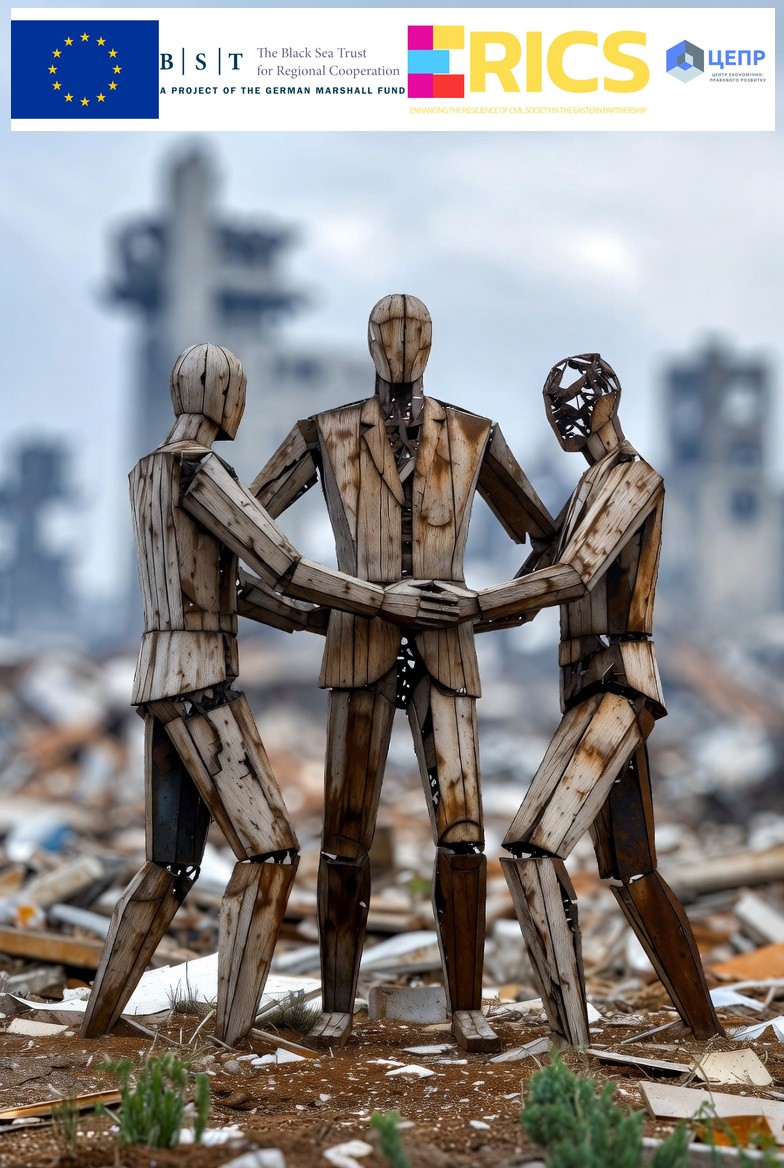
In times of challenge, when state institutions often appear overwhelmed or inflexible, it is civil society organizations that demonstrate an incredible ability to self-organize, quickly interact, and provide vital needs. The experience of countries that have gone through wars, natural disasters, or political upheavals, such as Ukraine, Armenia, and Georgia, vividly illustrates that cooperation in the third sector becomes a critical pillar for society. In Ukraine, with the beginning of the full-scale Russian invasion in 2022, an unprecedented network of interaction instantly formed. Numerous volunteer, human rights, humanitarian, and cultural initiatives not only intensified their efforts, but also created tight alliances. They were coordinated through online platforms such as Vognyk, joint chats, and headquarters. Logistic chains created by some organizations were used by others to deliver medicines, products, and generators. Human rights activists joined forces to document war crimes, and art projects collaborated with psychological services to help internally displaced persons. The division of roles was key: some focused on evacuation, others on providing legal advice, and still others on psychological rehabilitation. This network became a parallel but interconnected system, complementing and often preceding official state actions. The Armenian experience, in particular during and after the conflict in Nagorno-Karabakh in 2020, as well as during the massive influx of refugees in 2023, showed how the civil sector can become a major channel for humanitarian response. Organizations such as We Are, Vordan Karmir, and many others worked in close coordination. They created common databases of needs, centrally collected aid, and organized temporary housing and medical care. A special feature was the active involvement of the Armenian diaspora through partnerships with international charitable foundations, which allowed for rapid resource mobilization. Cooperation also went beyond direct assistance: organizations united to advocate for the interests of refugees, provided legal support, and engaged in socio-economic integration. Georgian civil society, tempered by crises ranging from the 2008 war to the COVID-19 pandemic, demonstrates a high level of institutional cooperation. During the pandemic, for example, various NGOs quickly formed coalitions to counter the consequences. Human rights groups monitored human rights compliance under restrictions, environmental organizations provided information about security, and social services adapted their work to support vulnerable groups. Platforms such as the Georgian Association of Civil Society (GACS) became an important mechanism, ensuring constant information exchange and joint advocacy. This allowed not only to respond effectively, but also to jointly influence government policy during the crisis.
Common features for all three countries are: **rapid establishment of communication bridges** between organizations of different profiles; **flexible division of responsibilities**, based on competencies and available resources; **active use of digital technologies** for coordination; and **building partnerships with international donors, business and local authorities**. The crisis in these countries has not only tested the strength of civil society, but also become a catalyst for its consolidation. Cooperation ceases to be just an effective tool – it turns into a form of social immunity, when a network built on trust and a common goal is able to withstand any shocks, saving lives, protecting dignity and rebuilding the future.

{{current_weather.dt | momentjs( atts.date )}}
{{current_weather.temp | temp}} °{{units}}
{{day.dt | momentjs(atts.date)}}
{{day.temp | temp}} °{{day.temp_min | temp}} °{{units}}
Civil society cooperation during crises: the experience of Ukraine, Armenia and Georgia




The website was created with the financial support of the European Union and the Black Sea Trust for Regional Cooperation.

Discussion about this post