

Introduction
Freedom of speech is one of the fundamental values of a democratic society. It is enshrined in international documents such as the Universal Declaration of Human Rights (1948) and the European Convention on Human Rights (1950). However, in the modern world, especially in countries undergoing political and social transformations, the realization of this right faces numerous challenges.
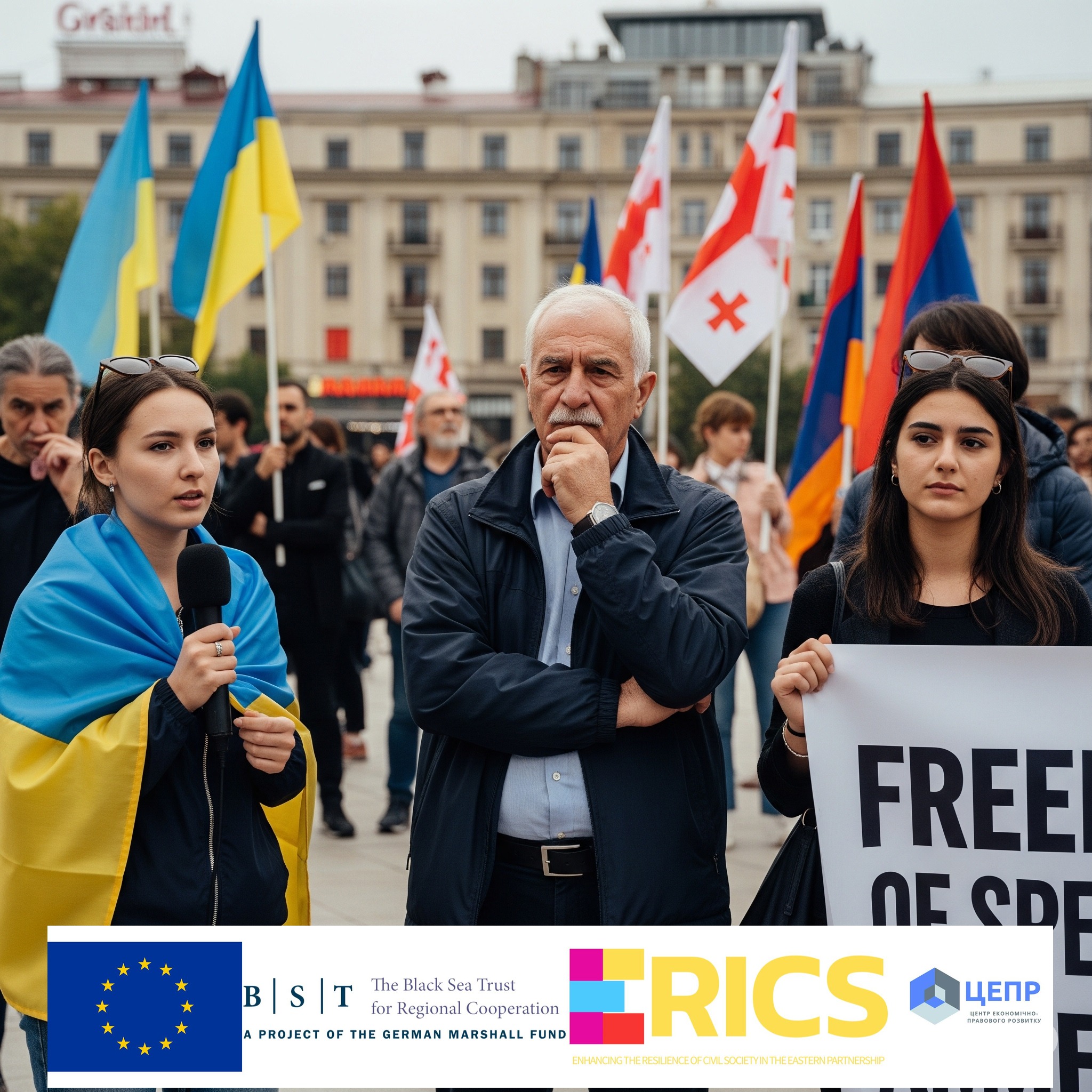
Ukraine, Georgia, and Armenia—three countries striving for European integration and democratic development—are encountering similar problems: propaganda influence, pressure from authoritarian regimes, cyber censorship, and political repression against media. This article examines international standards of freedom of speech, current challenges in these countries, and opportunities for cooperation to protect this fundamental right.
International Standards of Freedom of Speech
Universal Declaration of Human Rights (Article 19) – guarantees the right to freedom of opinion and expression.
European Convention on Human Rights (Article 10) – permits restrictions on freedom of speech only in cases of threats to national security, public order, or the reputation of others.
International Covenant on Civil and Political Rights (Article 19) – emphasizes that freedom of speech includes the right to seek, receive, and disseminate information.
These standards serve as benchmarks for Ukraine, Georgia, and Armenia as they align with EU criteria and other international institutions.
Challenges to Freedom of Speech in Ukraine, Georgia, and Armenia
1. War and Information Security (Ukraine)
Since Russia’s full-scale invasion in 2022, Ukraine has faced massive propaganda, cyberattacks on media, and pressure on journalists.
The government has imposed restrictions on pro-Russian media, sparking debates about balancing security and free speech.
2. Political Polarization and Media Control (Georgia)
Despite democratic progress, political elites in Georgia control key media outlets, leading to censorship and pressure on independent journalists.
The 2023 protests against the “foreign agents” law highlighted risks to freedom of speech.
3. Authoritarian Trends and Conflicts (Armenia)
After defeat in the Nagorno-Karabakh conflict (2023), Armenia saw increased pressure on opposition media.
The government restricts critical reporting under the guise of “national interests”, raising concerns among human rights advocates.
Opportunities for Cooperation in Protecting Freedom of Speech
Exchanging Best Practices with the EU and NATO
Ukraine, Georgia, and Armenia can collaborate with European institutions (Council of Europe, OSCE) to improve media legislation.
Establishing Joint Media Projects
Independent media in these countries can unite for investigative journalism, countering disinformation, and supporting journalists.
Cybersecurity and Journalist Protection
Joint cybersecurity initiatives can help counter attacks from Russia and other destabilizing forces.
Supporting Civil Society
Human rights organizations can develop joint freedom of speech monitoring and advocate for compliance with international standards.
Conclusion
Freedom of speech is not just a right but a cornerstone of democracy. Despite different challenges, Ukraine, Georgia, and Armenia can strengthen cooperation to protect freedom of speech based on international standards. Joint initiatives, knowledge-sharing with the EU, and support for independent media will help these countries become more resilient against propaganda and authoritarianism.
Only by joining forces can we defend the right to free speech—the foundation of a democratic future.

{{current_weather.dt | momentjs( atts.date )}}
{{current_weather.temp | temp}} °{{units}}
{{day.dt | momentjs(atts.date)}}
{{day.temp | temp}} °{{day.temp_min | temp}} °{{units}}
Freedom of Speech in the Modern World: International Standards and Challenges in the Cooperation of Ukraine, Georgia, and Armenia





The website was created with the financial support of the European Union and the Black Sea Trust for Regional Cooperation.

Discussion about this post