

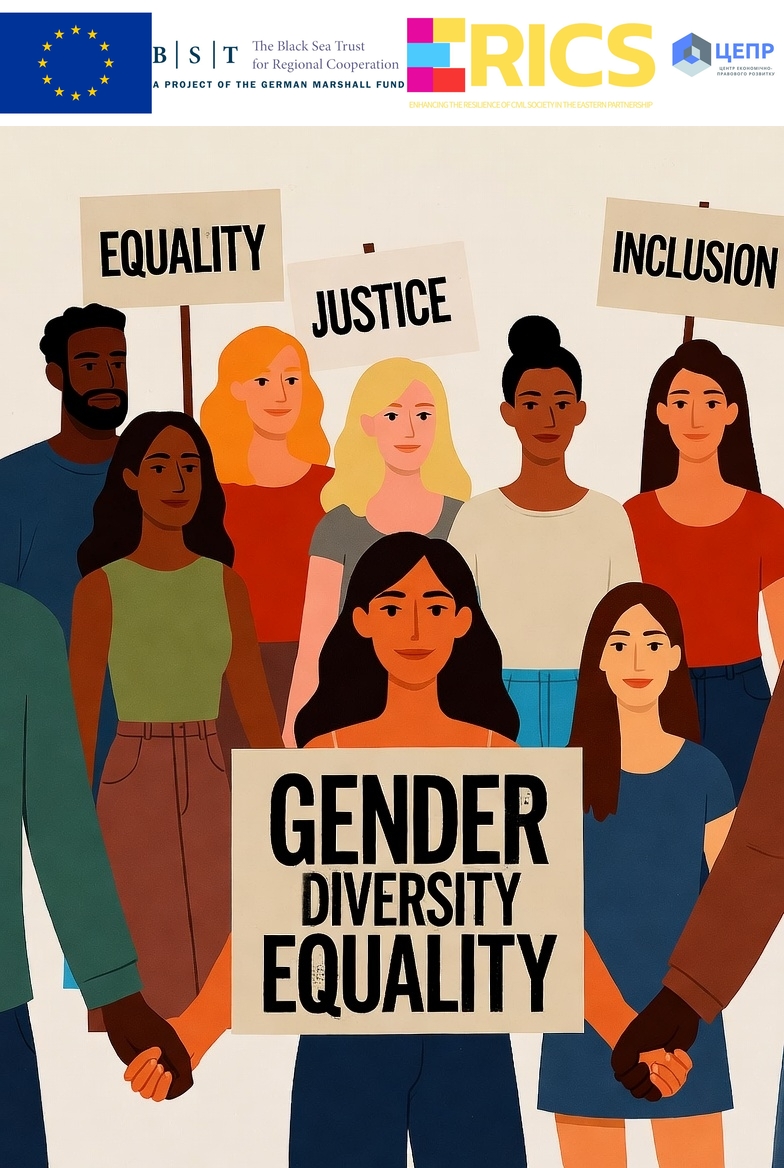
Gender equality is not just a trendy concept or a demand of the times. It is a powerful driver of sustainable development, economic growth, and social stability. When women and men have equal rights, opportunities, and access to resources, the entire society benefits: GDP increases, democracy strengthens, and the nation’s health improves. For countries like Ukraine, Georgia, and Armenia, which are on the complex path of European integration and internal transformations, gender equality is an integral part of success.
Why is it important for society?
Economic Growth: According to world research, fully engaging women in the economy can significantly increase a country’s GDP. Diversity in business and management leads to more balanced and innovative decision-making.
Social Justice and Human Rights: Gender equality is a fundamental human right. A society that adheres to these principles is more just, humane, and cohesive.
Stronger Democracy: When women are fully represented in politics and public life, parliaments and government bodies better reflect the interests of the entire population, enacting more effective laws.
Stability and Security: Research shows that peace processes and agreements are more durable when women actively participate in them.
Let’s look at successful cases and initiatives in Ukraine, Georgia, and Armenia that demonstrate the practical benefits of gender equality.
Ukraine: Women – the Driving Force of Resistance and Recovery
Following the full-scale Russian invasion, the role of women in Ukraine has become critically important. They not only make up a significant part of the Armed Forces of Ukraine but are also the backbone of the volunteer movement, civil society, and the local economy.
Successful Case: Women in Defense and IT
The “Women in Security” Initiative: This platform brings together women experts in the field of security and defense. They conduct training, advocacy, and ensure women’s representation at international forums. This not only fights stereotypes but also increases the effectiveness of the security sector through new perspectives.
The IT Sector: Ukraine’s IT industry, which remains one of the country’s key exporters, demonstrates a relatively high level of gender equality compared to other fields. Many women work as developers, project managers, and data scientists. This has been made possible by educational initiatives such as “Profession: QA Tester for Women” from Prometheus and UNIT.City, which provide women, including internally displaced persons, with new skills to start a career in IT. This directly impacts the country’s economic resilience.
Georgia: Combating Domestic Violence and Political Representation
Georgia has made significant strides in legislating for gender equality, particularly in combating one of the most acute social problems – domestic violence.
Successful Case: A Systemic Fight Against Domestic Violence
Adoption of Progressive Legislation: Georgia was one of the first countries in the region to adopt a special law on combating domestic violence. Specialized services, mobile groups, and shelters for victims were established.
The Role of Non-Governmental Organizations: Organizations such as “Women of Georgia” and “Sapari” have done extensive work to raise public awareness and provide direct assistance to victims. This joint work by the state and civil society has led to the issue of domestic violence no longer being a “private matter” but becoming a subject of public discourse and state response. This has directly saved the lives of many women and strengthened social safety.
Armenia: Economic Empowerment of Women
In Armenia, despite patriarchal traditions, the movement for women’s economic independence is gaining momentum, especially in the regions.
Successful Case: Supporting Women’s Entrepreneurship
Microfinancing and Training Programs: International organizations (e.g., EBRD, UNDP) together with local partners implement training programs and provide micro-loans for women who want to start or expand their businesses. This often relates to agriculture, tourism, and crafts.
Cooperatives and Associations: A successful example is the creation of women’s agricultural cooperatives. By joining forces, women can more efficiently produce, process, and sell their products (e.g., cheeses, fruits, knitted goods), bypassing intermediaries. This not only increases their income but also develops the local economy, reduces population drain from villages, and creates new jobs. An economically independent woman has a greater voice in the family and society.
Conclusion
The path to full gender equality in Ukraine, Georgia, and Armenia still lies ahead. However, the successful cases presented clearly demonstrate: investing in women’s rights and opportunities is not an expense, but one of the best investments in the future.
When women defend the country in Ukraine, when they stand up for their right to safety in Georgia, and when they build successful businesses in Armenia, they are not just “getting their rights.” They become the engine pulling the entire society towards a more prosperous, just, and sustainable future. And that is the most important reason why gender equality is needed by everyone.

{{current_weather.dt | momentjs( atts.date )}}
{{current_weather.temp | temp}} °{{units}}
{{day.dt | momentjs(atts.date)}}
{{day.temp | temp}} °{{day.temp_min | temp}} °{{units}}
Gender Equality: Why It Is Important for Society? Successful Project Cases from Ukraine, Georgia, and Armenia






The website was created with the financial support of the European Union and the Black Sea Trust for Regional Cooperation.

Discussion about this post