

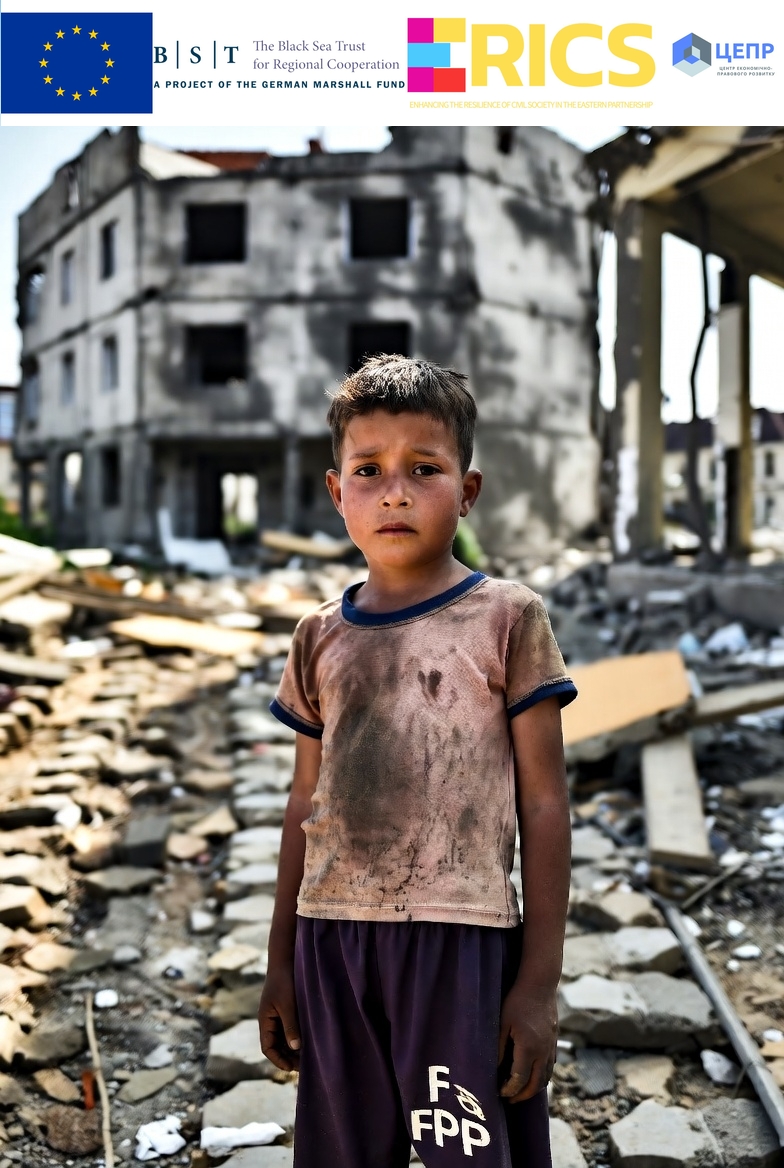
War is always a tragedy, but for children, it is a uniquely traumatic experience. They lose their homes, loved ones, safety, and their ordinary childhood. The rights to life, education, healthcare, and protection from violence, guaranteed by the UN Convention on the Rights of the Child, are severely threatened in conflict zones. So, how are the most vulnerable protected in the most dangerous regions? Let’s look at the examples from Ukraine, Georgia, and Armenia.
Ukraine: Comprehensive Protection During a Full-Scale War
With the start of Russia’s full-scale invasion in 2022, Ukraine faced a colossal challenge in protecting millions of children. Its child protection system was rebuilt in real-time.
Evacuation and Safe Spaces: The first step was the mass evacuation of children from frontline regions – Kharkiv, Donetsk, Luhansk, Kherson, and Zaporizhzhia. This task is undertaken by both state emergency services and numerous volunteer organizations. In temporary shelters and across the country, “safe spaces” – rooms for psychological relief – are being created where children can play, learn, and receive psychological help.
Psychological Support: Ukraine has developed one of the world’s most progressive systems of psychosocial support. Networks of mobile psychological teams work directly in frontline villages. Projects like “Psychological First Aid” from UNICEF and the Ministry of Education train teachers and parents to help children cope with anxiety and stress.
Education in Wartime: The right to education is being realized through online learning – a challenge due to power outages – and a network of “Education Hubs” in basements and subway stations. In frontline cities like Mykolaiv and Kharkiv, specialized underground schools, protected from shelling, are being built.
Documenting War Crimes: Ukraine actively documents violations of children’s rights by the Russian army – abduction, deportation, killing, and injury. This work, carried out by the Office of the Prosecutor General together with international organizations, aims to hold the perpetrators accountable.
Georgia: Localized Protection in a Frozen Conflict Zone
Following the 2008 war, parts of Georgia’s territory – Abkhazia and South Ossetia – remain occupied. This has created problems for children in border villages regarding access to education, healthcare, and social services.
Mobile Teams: Because access to permanent institutions in the conflict zones is limited, mobile teams of social workers, psychologists, and doctors have become a key tool. They regularly visit families living along the administrative boundary line, providing necessary services directly on-site.
Inclusion Through Education: For children who were forced to leave their homes and became internally displaced persons (IDPs), the Georgian government, with the support of international partners, has created programs to integrate them into local schools. An important aspect is teaching Georgian as the state language to children from minorities, helping them join the educational process.
Legal Protection: Non-governmental organizations, such as “Civic Development and Integration” (IDP), provide legal assistance to IDP families, helping them uphold their rights to housing, compensation, and access to state services.
Armenia: Supporting Refugee Children and Those Affected by Escalation
Armenia, which regularly faces escalations of the conflict in Nagorno-Karabakh, has experience protecting children who arrive en masse as refugees.
Rapid Integration: Following the escalation in September 2023, which led to the dissolution of the independent entity in Artsakh and a mass exodus of the Armenian population, Armenia faced the need to quickly accommodate tens of thousands of children. Temporary camps were set up, and food and medical aid points were deployed. A key task was to enroll children in schools in Armenian communities as quickly as possible to restore their sense of stability and normalcy.
Psychological Rehabilitation: For children who experienced siege, the loss of their homes, and violence, psychological rehabilitation centers have been established. Specialists work with them using art therapy, play therapy, and group sessions to help them process their trauma.
Socio-Economic Support: Many refugee families lost their livelihoods. The state, together with organizations like World Vision and Armenia Caritas, provides financial assistance, food, and helps parents find work, as the family’s economic stability is the foundation of a child’s well-being.
Conclusion: Common Challenges and Universal Solutions
The experience of Ukraine, Georgia, and Armenia shows that protecting children’s rights in war requires a comprehensive approach:
Safety and Evacuation – physical protection is an absolute priority.
Psychological Help – is no less important than physical help in preventing lifelong trauma.
Continuity of Education – gives children hope, routine, and a chance for a future.
Mobile Services – are key to providing aid in hard-to-reach regions.
International Cooperation – support from the UN, UNICEF, the Red Cross, and other organizations is vitally necessary.
Unfortunately, the question is not whether a childhood stolen by war can be fully restored, but how to minimize the harm and give a child a chance for a future filled with light, not just memories of darkness. And in this struggle for the future, every saved child is a victory.

{{current_weather.dt | momentjs( atts.date )}}
{{current_weather.temp | temp}} °{{units}}
{{day.dt | momentjs(atts.date)}}
{{day.temp | temp}} °{{day.temp_min | temp}} °{{units}}
How Are Children’s Rights Protected in War? Lessons from the Frontline Regions of Ukraine, Georgia, and Armenia


The website was created with the financial support of the European Union and the Black Sea Trust for Regional Cooperation.

Discussion about this post