

Open government is not just a buzzword, but the foundation of a modern democratic society. In Ukraine, citizens’ right to access public information is guaranteed by the Constitution and a special Law “On Access to Public Information”. But knowledge of what tools can be used often remains theoretical. In practice, every citizen has a whole arsenal of legal ways to obtain information of public interest from state bodies, local councils or state-owned enterprises.
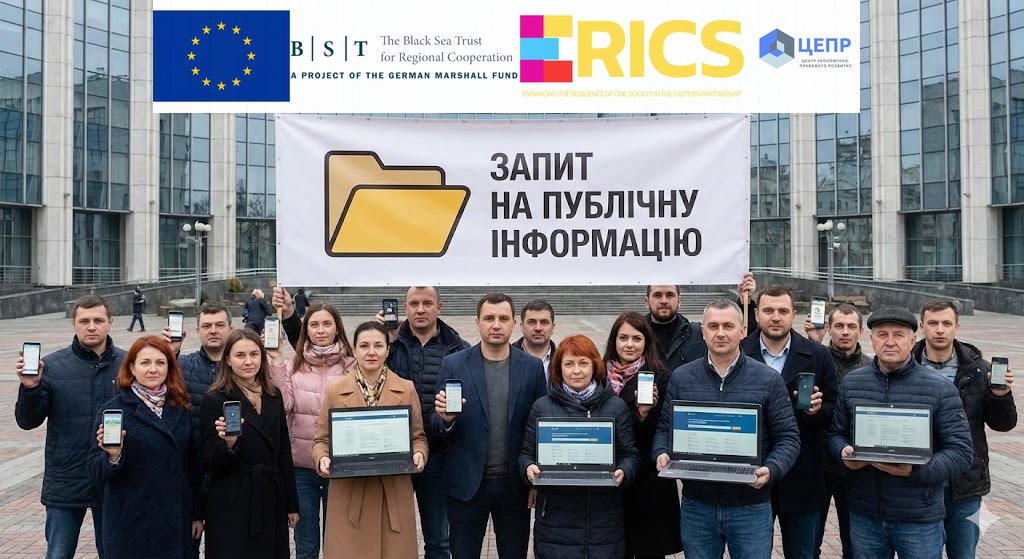
The simplest and most common tool is a written information request. It can be submitted to any government body by e-mail, through the official web portal or by visiting in person. The law requires that the request be considered within 5 working days (and in some cases – up to 20 days). It is important to clearly formulate in the request what information you want to receive. They can refuse only in cases provided for by law (for example, if the information constitutes a state secret or violates the rights of third parties), but such a refusal can be appealed.
An effective mechanism is to view the official web pages of government bodies. The law obliges them to publish a range of information in the public domain in the section “On Access to Public Information”. There you can find statutory documents, information on the budget, activity reports, data on public procurement, etc. If the necessary information is not available on the website, its absence is already a violation, which can be reported to the Commissioner for Human Rights or to the court.
For more complex or systemic issues, there are public councils under government bodies. Members of such councils have greater opportunities to obtain information and influence decisions. Active citizens can also initiate public hearings on important issues, which obliges the authorities to present their position and arguments publicly. We should not forget about the media: journalists often use inquiry tools for investigations, and their publications can become a catalyst for providing information to the general public.
If the authorities ignore requests or refuse without grounds, the rights of citizens are protected by the Commissioner for Human Rights of the Verkhovna Rada of Ukraine and a specialized body – the Office of the Ombudsman for Access to Public Information. They can be contacted with a complaint, and they have the authority to conduct inspections and issue binding orders. The court always remains the last resort. Legal actions for access to information are a powerful signal to the authorities that citizens are ready to defend their rights. Experience shows that even the threat of a trial often encourages officials to comply with the law.
It is also worth mentioning electronic petitions. On the official e-petitions portal, Ukrainians can not only express their proposals, but also demand public explanations from the authorities regarding certain decisions or situations. If the petition gains the necessary number of votes, the authority is obliged to consider it and give an official response.
Thus, the requirement of openness is not an abstract right, but a set of specific actions. From a simple request to a lawsuit. Success depends on knowledge of the laws, perseverance, and willingness to use all available tools. When citizens actively seek this, they not only receive the necessary data, but also create an environment where the authorities feel real responsibility to society. Openness is not given – it is consistently and persistently demanded. And it is in this process that true citizen participation and control over the authorities is born.

{{current_weather.dt | momentjs( atts.date )}}
{{current_weather.temp | temp}} °{{units}}
{{day.dt | momentjs(atts.date)}}
{{day.temp | temp}} °{{day.temp_min | temp}} °{{units}}
How can citizens demand openness from government? Information access tools





The website was created with the financial support of the European Union and the Black Sea Trust for Regional Cooperation.

Discussion about this post