

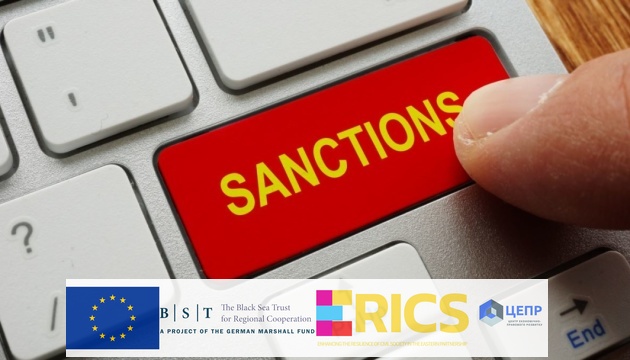
International sanctions are a foreign policy instrument aimed at achieving political, economic or security objectives, such as deterring aggression, countering the proliferation of weapons of mass destruction or protecting human rights. They can be multilateral (e.g. imposed by the UN Security Council) or unilateral (by individual states or alliances such as the EU or the US). However, their impact on human rights is ambiguous: sanctions can promote the protection of rights by putting pressure on violators, but often have negative consequences for the civilian population, violating economic, social and cultural rights. On the one hand, sanctions aim to hold accountable for gross human rights violations. For example, targeted (or “smart”) sanctions, such as asset freezes, travel bans or sectoral restrictions, allow for direct influence on elites and responsible individuals, while minimizing harm to the population. Research shows that in some cases sanctions have contributed to improved human rights, for example in the Democratic Republic of the Congo, where the threat of sanctions forced armed groups to release child soldiers. Similarly, sanctions against regimes that commit systematic abuses can signal international solidarity with victims and spur domestic change. On the other hand, empirical research overwhelmingly shows that sanctions have a negative impact on human rights in targeted countries. Comprehensive sanctions often lead to a worsening of the economic situation, increased poverty, and restricted access to food, medicine, and education, which violates the rights to health, nutrition, and development. According to numerous UN reports and academic studies, sanctions exacerbate inequality, increase mortality (especially among children and vulnerable groups), and can provoke repression by regimes that use external pressure to justify domestic control. For example, in Iraq in the 1990s, sanctions caused a significant increase in child mortality due to shortages of medicines and food. Similar effects were observed in Iran, where sanctions restricted the import of medicines, worsening access to treatment, and in Cuba, where a long-term US embargo led to chronic health and nutrition problems.
In the case of Venezuela, US sanctions, imposed since 2017, have contributed to economic collapse, mass emigration, and a worsening humanitarian situation, although their goal was to pressure the Maduro regime for human rights abuses. Research indicates that sanctions often fail to achieve political change but instead increase repression: regimes redistribute resources in favor of loyal elites, and the opposition is accused of “treason” due to external pressure. In North Korea, sanctions have not stopped its nuclear program, but have limited humanitarian assistance, worsening living conditions for the population.
As for Russia, Western sanctions following the annexation of Crimea and the full-scale invasion of Ukraine in 2022 were aimed at deterring aggression and protecting human rights in the occupied territories. They affected the economy, but the regime adapted by reorienting trade, and the negative effects (inflation, import restrictions) partially affected the population. At the same time, sanctions against Russian officials and propagandists contributed to the isolation of human rights violators in the occupied Crimea and Donbas.
In Ukraine, sanctions against Russian citizens and companies imposed by the National Security and Defense Council are often criticized by human rights activists for potential violations of human rights, in particular the right to a fair trial and property, since they are applied extrajudicially. However, in the context of aggression, they are aimed at protecting national security and the rights of Ukrainians.
Overall, the literature (UN reports, studies by Peksen, Rodríguez and others) suggests that negative humanitarian consequences prevail, especially with comprehensive sanctions: 30 out of 32 studies find worsening poverty, mortality and human rights indicators. Positive effects are more often observed with targeted sanctions with humanitarian exceptions. To minimize harm, it is recommended to conduct prior impact assessments, provide humanitarian exceptions and coordinate sanctions internationally. Sanctions are thus a dual tool: they can protect human rights at the global level, but often violate them at the local level, requiring a balance between political objectives and humanitarian principles. Further development of “smart” sanctions with an emphasis on proportionality and monitoring is the key to effectiveness without excessive harm.

{{current_weather.dt | momentjs( atts.date )}}
{{current_weather.temp | temp}} °{{units}}
{{day.dt | momentjs(atts.date)}}
{{day.temp | temp}} °{{day.temp_min | temp}} °{{units}}
How international sanctions affect human rights: case analysis





The website was created with the financial support of the European Union and the Black Sea Trust for Regional Cooperation.

Discussion about this post