

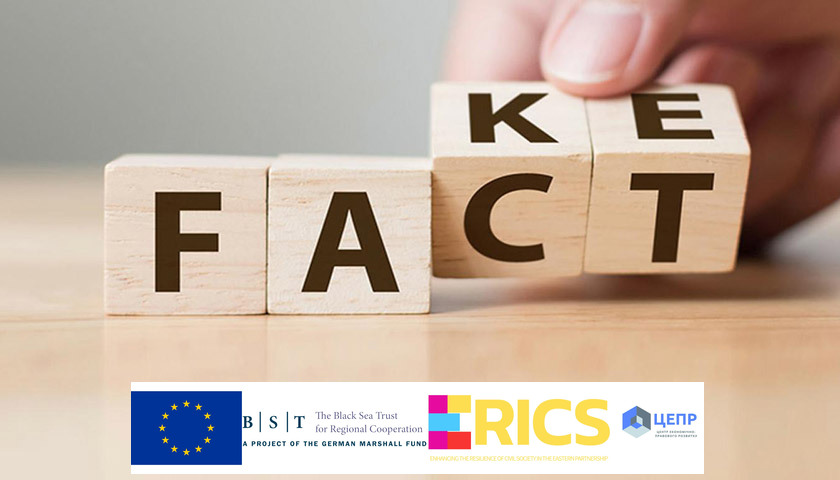
In today’s world, where information spreads at an incredible speed, it is crucial to distinguish real news from fake stories, manipulations, and propaganda. This is especially important for activists, human rights defenders, and civil society leaders who often work with sensitive or politically charged topics.
This article explores key methods for verifying information and provides examples of how to check news before sharing it.
1. Check the Source
The first rule is always to identify who published the information.
Official sources: Government websites, official pages of law enforcement agencies, international organizations (e.g., UN, OSCE).
Unfamiliar websites: If the information is published on an unknown platform, check its history, contacts, and authors.
Social media: Accounts with verified badges (blue checkmark) are more reliable, but even they should be double-checked.
Example: If a Telegram channel reports mass arrests, first look for confirmation on police or human rights organizations’ websites.
2. Analyze the Date and Location of the Event
Fake news often contains incorrect dates or locations.
Pay attention to timestamps (when a photo/video was published).
Use geolocation tools: Google Maps, photo metadata (but keep in mind it can be manipulated).
Example: If someone shares a video of a “recent shelling,” but the trees have yellow leaves (autumn) while it’s currently summer, this is suspicious.
3. Look for Alternative Sources
No news should be taken at face value without confirmation.
Check if other media outlets report it (independent, international ones).
Use fact-checking websites: StopFake, VoxCheck, AFP Fact Check.
Example: If Russian sources claim “mass protests in Ukraine,” but Ukrainian and Western media do not report it—this is likely disinformation.
4. Analyze Photos and Videos
Manipulation of visual content is one of the most common disinformation tactics.
Use reverse image search (Google Reverse Image Search, TinEye).
Check metadata (but remember it can be altered).
Look for the original: Old photos are often passed off as new events.
Example: In 2022, Russian propagandists used images from 2014 natural disasters, presenting them as “aftermath of Ukrainian shelling.”
5. Pay Attention to Language and Emotional Tone
Disinformation often includes:
Overly emotional headlines (“SHOCKING!”, “SENSATION!”).
Vague anonymous quotes (“sources say”).
Errors in the text (wrong city names, organizations).
Example: Instead of “Politician X accused of corruption!” it should say “Prosecutors opened a case against Politician X under Article Y.”
6. Use Verification Tools
Some useful services:
InVID – video analysis for manipulations.
Forensically – checking photos for edits.
Wayback Machine – website archives.
Conclusion
Misinformation can harm reputations, cause panic, or even influence political decisions. Activists and human rights defenders must be especially careful about the accuracy of the information they share.
Remember: It’s better to check ten times than to spread falsehoods once.
If you encounter suspicious information, report it to fact-checkers or verify it with official sources. Your vigilance can save someone’s reputation—or even life.

{{current_weather.dt | momentjs( atts.date )}}
{{current_weather.temp | temp}} °{{units}}
{{day.dt | momentjs(atts.date)}}
{{day.temp | temp}} °{{day.temp_min | temp}} °{{units}}
How to Verify News: Recommendations for Activists and Human Rights Defenders


The website was created with the financial support of the European Union and the Black Sea Trust for Regional Cooperation.

Discussion about this post