

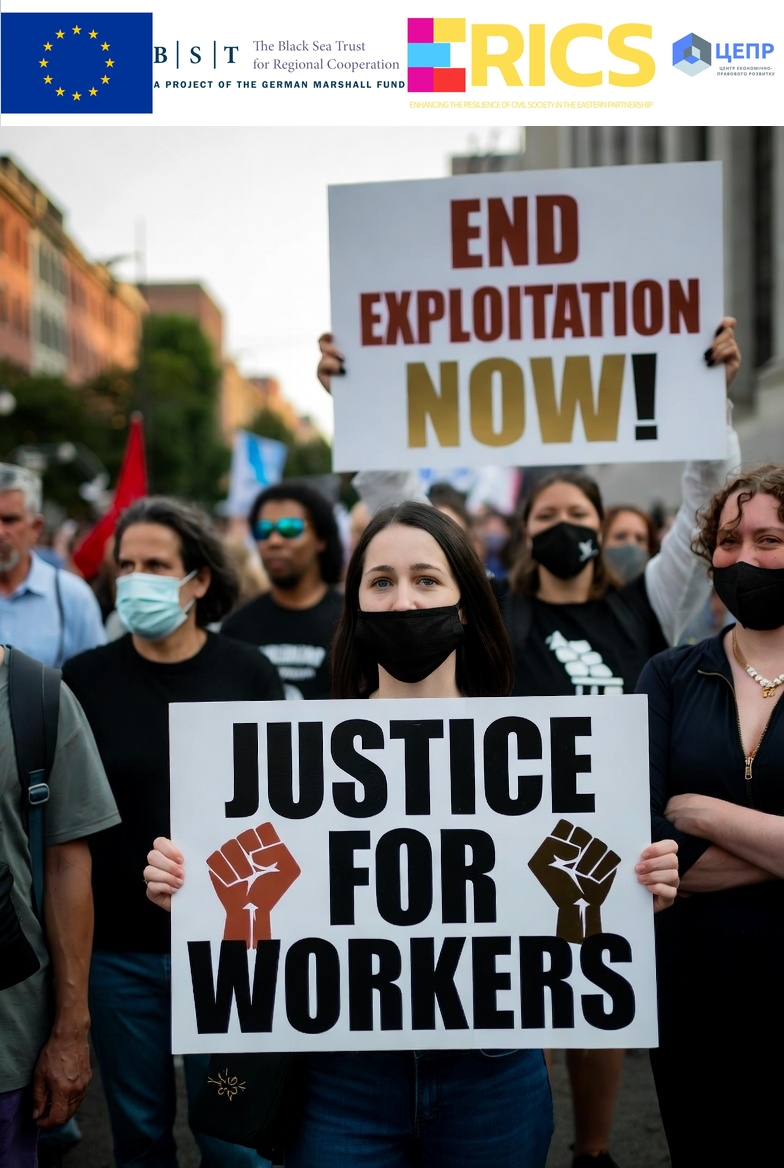
Economic and social upheavals caused by war, pandemic, or other global crises significantly impact the labor market. In such conditions, employees often face uncertainty, pressure from employers, and the risk of their rights being violated. Understanding the basic principles of labor law becomes not just a useful skill but a vital necessity.
This article is a kind of guide for employees in Ukraine, Georgia, and Armenia to help them navigate key aspects of labor rights during a crisis.
General Principles Relevant to All Three Countries
Regardless of the country, there are a number of universal rules that must be followed:
Written Form for Any Changes. Any changes to your employment contract terms (salary, work schedule, job responsibilities) must be formalized by an additional agreement and signed by both parties. Verbal agreements are worthless.
Official Employment. Working without an official employment contract is a huge risk. The contract is your guarantee of salary payment, vacation, social security contributions, and pension.
Dismissal Procedure. Dismissal must occur exclusively on the grounds provided for by the labor code. Be careful: under the guise of “voluntary resignation,” you may be asked to write a statement to avoid the payment of severance pay.
Document All Violations. Keep all correspondence with management, especially regarding non-payment of wages, unlawful demands, or threats. Take screenshots, save emails, and official orders.
Now let’s look at the key differences and nuances in each country.
Ukraine: Specifics of the Legal Framework under Martial Law
Labor relations in Ukraine are largely regulated by special laws adopted due to martial law.
Work Schedule and Leave:
Leave: By law, the employer has the right to unilaterally recall an employee from annual leave, except in certain cases (e.g., pregnancy). Forced leave without pay is also possible if stipulated by martial law.
Overtime: Engaging in overtime work without the employee’s consent is possible in conditions related to restoring the enterprise’s operations after the consequences of hostilities.
Dismissal: During martial law, the protection of certain categories of employees (e.g., those with children under 18) is enhanced. However, a simplified procedure applies for resignation by one’s own volition – it is sufficient to submit an application electronically.
Salary: A delay in salary payment of more than one month is a gross violation. In case of non-payment, you have the right to suspend work, having notified the employer 10 days in advance. Your job and average earnings are retained during this suspension.
What to Do?
In case of salary delay – write an official request/demand to the employer.
Contact the State Labor Service or go to court. The deadline for applying to the court is suspended during martial law.
Follow the official clarifications from the Ministry of Social Policy regarding current norms.
Georgia: Liberal Legislation and the Importance of Caution
Georgian labor legislation is considered one of the most liberal, providing significant freedom for agreements between the employee and the employer. This requires increased vigilance from the employee.
The Employment Contract is Your Main Protector. Since much is determined by the contract itself, read every clause carefully before signing, especially regarding termination conditions, probation period, and financial liability.
Dismissal: The employer has the right to terminate the contract at any time, if provided for in the agreement. However, they are obliged to pay compensation of at least one month’s salary (unless a different amount is specified in the contract). This is an important guarantee!
Leave: The right to annual paid leave (at least 24 working days) is enshrined in law. The employer cannot refuse to grant it.
Trade Unions: The level of trade union movement in Georgia is lower than in Ukraine or Armenia, so employees often face problems alone.
What to Do?
Don’t rush to sign the contract. If necessary, consult a lawyer.
If facing the threat of dismissal, demand a written notice and the mandatory payment of compensation.
In case of a conflict, contact the Labor Inspection Service of the Ministry of Health, Labor and Social Protection of Georgia or go to court.
Armenia: A Classic Approach with Protection of Social Guarantees
Labor law in Armenia is largely similar to Ukraine’s, with clearly defined guarantees for employees.
Dismissal: The list of grounds for dismissal at the employer’s initiative is limited and clearly defined in the Labor Code (absenteeism, inadequacy for the position, etc.). Dismissal without valid reasons is illegal.
Probation Period: Cannot exceed 3 months, and for managers – 6 months. During this period, you can be dismissed without severance pay, but the procedure must be followed.
Salary: A delay in salary payment for more than 15 days is a violation. The employee has the right to stop work, having notified the employer in writing, until the debt is paid.
Leave: The minimum duration of annual leave is 28 calendar days. Part of the leave (at least 14 days) must be granted continuously.
What to Do?
In case of non-payment of salary, send a written complaint to the employer.
Keep all documents confirming your employment relationship: a copy of the employment contract, orders, pay slips or receipts (if paid in cash).
To protect your rights, contact the State Labor Inspectorate or go to court.
Universal Tips for a Crisis
Don’t panic and don’t sign anything under pressure. Any document is your legal responsibility.
Seek support. Unite with colleagues for collective protection of your interests. It is much more difficult to violate the rights of a group of people than of a single employee.
Consult with specialists. Free legal aid is often provided by non-governmental organizations and trade unions.
Know your rights. Your best weapon is knowledge. Study the basic articles of your country’s Labor Code.
Remember: a crisis is not a reason to cancel the law. Even in the most difficult times, your labor rights remain the primary tool for protecting your well-being and dignity. Be attentive, persistent, and do not be afraid to stand up for what is right.

{{current_weather.dt | momentjs( atts.date )}}
{{current_weather.temp | temp}} °{{units}}
{{day.dt | momentjs(atts.date)}}
{{day.temp | temp}} °{{day.temp_min | temp}} °{{units}}
Labor Rights in Times of Crisis: What Employees in Ukraine, Georgia, and Armenia Need to Know



The website was created with the financial support of the European Union and the Black Sea Trust for Regional Cooperation.

Discussion about this post