

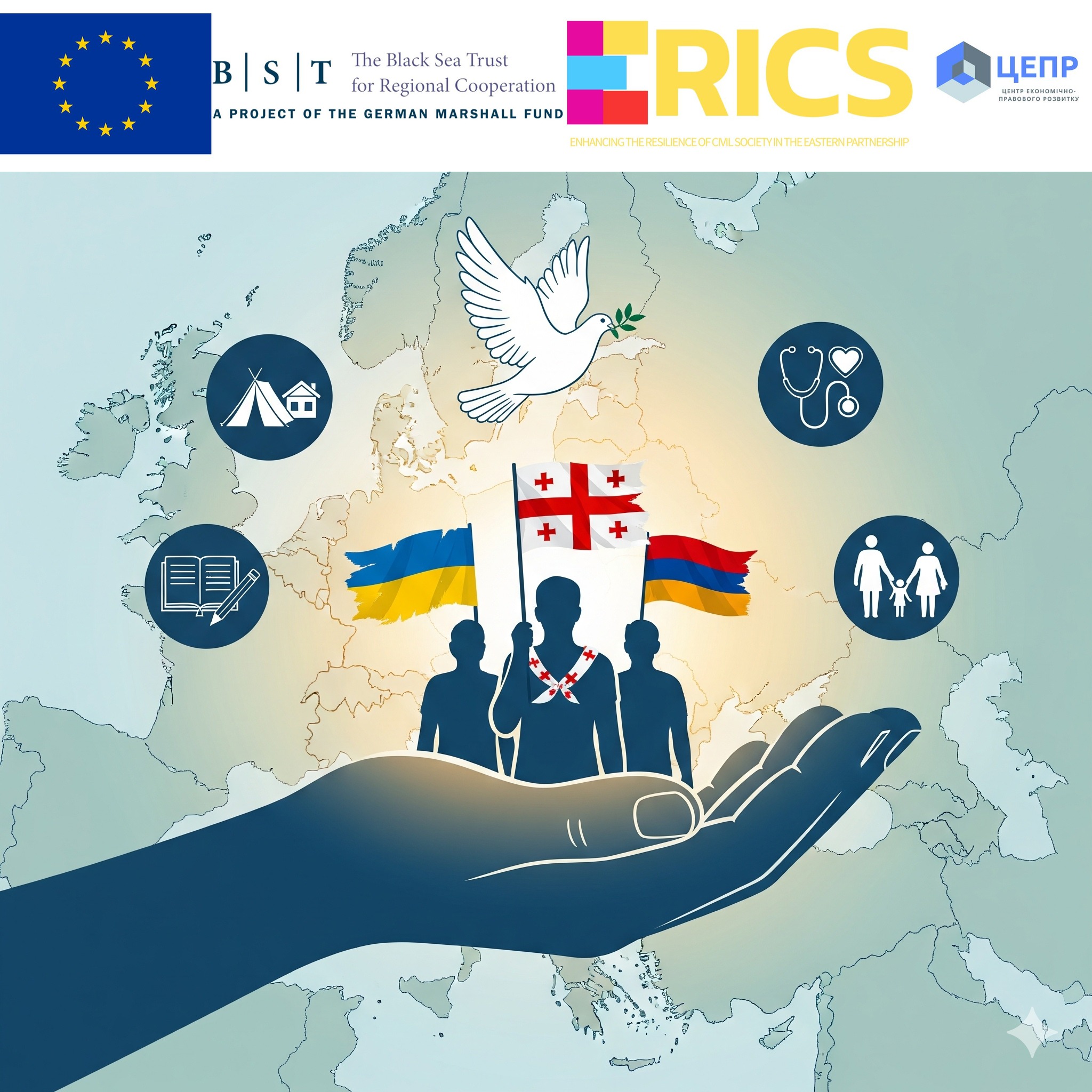
The issue of protecting the rights of refugees and internally displaced persons (IDPs) remains one of the most pressing challenges of our time. Conflicts, persecution, and environmental disasters force millions of people to seek refuge, creating pressure on host countries. Vulnerable groups require particular attention: children, women, people with disabilities, and the elderly. The experience of countries that have themselves faced massive refugee flows is a valuable source of knowledge. Ukraine, Georgia, and Armenia—three European nations whose histories are deeply intertwined with forced displacement—offer crucial lessons on how to protect those most in need.
Ukraine: The Challenges of Mass Internal Displacement and the Role of Digitalization
Following the start of the full-scale Russian aggression in 2022, Ukraine became a country with one of the largest IDP populations in the world—over 5 million people. This unprecedented challenge forced the state to adapt quickly and create protection mechanisms.
Key lessons from the Ukrainian experience:
Centralization and Digitalization: The government quickly launched the “Diia” portal, creating a unified register of IDPs. This reduced bureaucracy, ensured transparency, and enabled the rapid distribution of social payments and services. A digital passport and identification allowed people to access services remotely, which is critically important for those who had been displaced multiple times.
Focus on Children: Programs for distance learning were implemented, psychological support was provided, and safe spaces were created in areas with high concentrations of displaced people. A crucial step was the integration of refugee children from occupied territories into the Ukrainian education system.
International Support and Civil Society: The active role of international organizations (UNHCR, IOM, UNICEF) and the incredible mobilization of Ukrainian volunteer and civil society organizations helped fill gaps in the state system by providing humanitarian aid, legal consultations, and psychological support.
The main conclusion: Even in the context of active hostilities, effective coordination between the state, international partners, and civil society, supported by digital technology, can save lives and ensure the dignity of millions.
Georgia: The Experience of Protracted Displacement and Integration
Georgia has decades of experience working with IDPs due to the conflicts of the early 1990s and 2008. This displacement is long-term, requiring strategies not only for providing shelter but also for long-term integration.
Key lessons from the Georgian experience:
Transition from Humanitarian Aid to Integration: The government of Georgia, together with international donors, gradually shifted from providing temporary housing to programs for constructing new housing and providing compensation for lost property. This helped improve living conditions and the socio-economic status of IDPs.
Economic Self-Sufficiency: Programs for vocational training, small business support, and micro-credits for IDPs are being implemented. The goal is to help people become economically independent, not just recipients of aid.
Vulnerable Groups: Targeted programs were created for the elderly and people with disabilities, including accessible infrastructure and specialized social services.
The main conclusion: Long-term displacement requires a transition from emergency response to sustainable development. Investments in housing, economic opportunities, and social integration are key to preventing the marginalization of entire generations.
Armenia: Mass Refugee Acceptance in a Short Timeframe
In September 2023, Armenia faced a massive influx of over 100,000 Armenians from Nagorno-Karabakh, who crossed the border within a few days. The country, with a population of about 2.8 million, demonstrated exemplary readiness and solidarity.
Key lessons from the Armenian experience:
Rapid Mobilization: The government, local authorities, civil society, and ordinary citizens instantly joined forces to provide primary aid: food, water, medical care, and temporary shelter.
Coordination at All Levels: Operational headquarters were created to coordinate the efforts of the state and international organizations. This avoided chaos and allowed for the efficient distribution of resources.
A Comprehensive Approach: Beyond humanitarian needs, work on reintegration began immediately: providing status, documents, and access to healthcare, education, and the labor market. Particular attention was paid to psychological support to overcome collective trauma.
The main conclusion: Even a country with limited resources can effectively respond to a massive influx of refugees through clear coordination, public solidarity, and the rapid engagement of international support. It is important to think not only about survival from the very first day but also about future integration.
Common Conclusions and Recommendations
The experience of Ukraine, Georgia, and Armenia allows us to formulate key principles for protecting the rights of refugees and vulnerable groups:
Coordination is Everything: Success depends on clear coordination between the government (national and local), international agencies, and non-governmental organizations. Everyone must know their role.
Technology as a Lifesaving Tool: Digital platforms for registration, payments, and service provision are indispensable for speed, transparency, and combating corruption.
Integration Starts Today: Issues of housing, education, healthcare, and employment cannot be postponed. A long-term perspective must be considered from the first days.
Psychological Support is Not a Luxury: Overcoming trauma, especially in children, is critical for restoring a person’s ability to live a productive life.
Solidarity is the Most Valuable Resource: The willingness of society to accept and support refugees is the foundation of any successful response.
These countries, which have themselves endured deep crises, show the world that even under the most difficult conditions, it is possible and necessary to act with humanity, efficiency, and respect for the rights and dignity of every person. Their experience is not only a story of survival but also a roadmap for the entire global community.

{{current_weather.dt | momentjs( atts.date )}}
{{current_weather.temp | temp}} °{{units}}
{{day.dt | momentjs(atts.date)}}
{{day.temp | temp}} °{{day.temp_min | temp}} °{{units}}
Refugee Rights: How to Ensure Protection for Vulnerable Groups? The Experience of Ukraine, Georgia, and Armenia


The website was created with the financial support of the European Union and the Black Sea Trust for Regional Cooperation.

Discussion about this post