

Introduction
In today’s world, where global crises, geopolitical tensions, and economic instability pose challenges for many countries, regional cooperation takes on special significance. For Ukraine, Armenia, and Georgia—nations facing similar challenges, including external threats, economic difficulties, and the need for reforms—partnership at the regional level is a key tool for development.
These countries are united not only by geographical proximity but also by shared interests: integration into European structures, development of transport corridors, digital transformation, and strengthening security. In this article, we will examine specific examples of successful regional cooperation that can serve as models for other states.
1. Ukraine: From Cross-Border Initiatives to Infrastructure Breakthroughs
1.1. Joint Programs with the EU and Neighboring Countries
Ukraine actively participates in European cooperation programs, including:
The Eastern Partnership Initiative – promotes political association, economic integration, and citizen mobility.
Cross-border programs (Interreg, ENI CBC) – Hundreds of infrastructure, energy, small business, and cultural projects have been implemented with Poland, Slovakia, Romania, and Moldova.
Success Story:
The modernization of the “Yahodyn-Dorohusk” border crossing (Ukraine-Poland) with EU support increased capacity and accelerated border crossing, positively impacting trade.
1.2. Black Sea Economic Cooperation (BSEC)
Ukraine is an active participant in BSEC, where joint projects with Georgia, Turkey, Romania, and others are being implemented, such as:
Development of port infrastructure (Odesa, Chornomorsk, Poti).
Creation of alternative transport routes to reduce dependence on Russian corridors.
Promising Project:
“The Greater Eurasian Transport Ring” – A joint initiative of Ukraine, Georgia, Azerbaijan, and Kazakhstan to increase cargo flow between Europe and Asia.
2. Armenia: Innovation, Education, and Energy
2.1. IT Ecosystem and Cooperation with Georgia
Despite being landlocked, Armenia has bet on technology:
TUMO Center for Creative Technologies – An international educational platform collaborating with Georgian universities.
Armenian-Georgian IT Corridor – Joint startups, outsourcing centers, and talent exchange.
Success Story:
The company PicsArt (an Armenian photo-editing app) actively operates in the Georgian market, while Tbilisi-based developers participate in Armenian tech hackathons.
2.2. Energy Security and Green Energy
Due to closed borders with Azerbaijan and Turkey, Armenia is developing alternative energy sources:
Solar power plants with EU support (e.g., the Masrik project).
Energy cooperation with Iran (gas pipeline, electricity exchange).
3. Georgia: Transport, Logistics, and Euro-Integration
3.1. Trans-Caucasus Transport Corridor
Georgia is a key link in the “China-Kazakhstan-Azerbaijan-Georgia-Europe” route.
Port of Poti – A major hub for Ukrainian and Kazakh exports.
Baku-Tbilisi-Kars Railway – An alternative to Russian transport routes.
Impact on Ukraine:
After Russia’s blockade of the Black Sea, Ukrainian exporters have actively used Georgian ports for grain and metal shipments.
3.2. The Three Seas Initiative and Alternative Logistics
Georgia participates in initiatives aimed at developing infrastructure between the Baltic, Black, and Adriatic Seas. This helps:
Reduce dependence on Russian transport routes.
Attract investments in roads and railways.
Conclusion: Prospects for Further Cooperation
Ukraine, Armenia, and Georgia have already proven that regional cooperation can be an effective tool for: Economic growth (transport, trade, IT). Strengthening security (alternative energy and transport routes). EU integration (joint programs with Europe).
Areas for Further Development:
Expanding digital partnerships (joint IT clusters).
Creating a unified energy market (renewable energy).
Deeper cooperation under the Eastern Partnership.
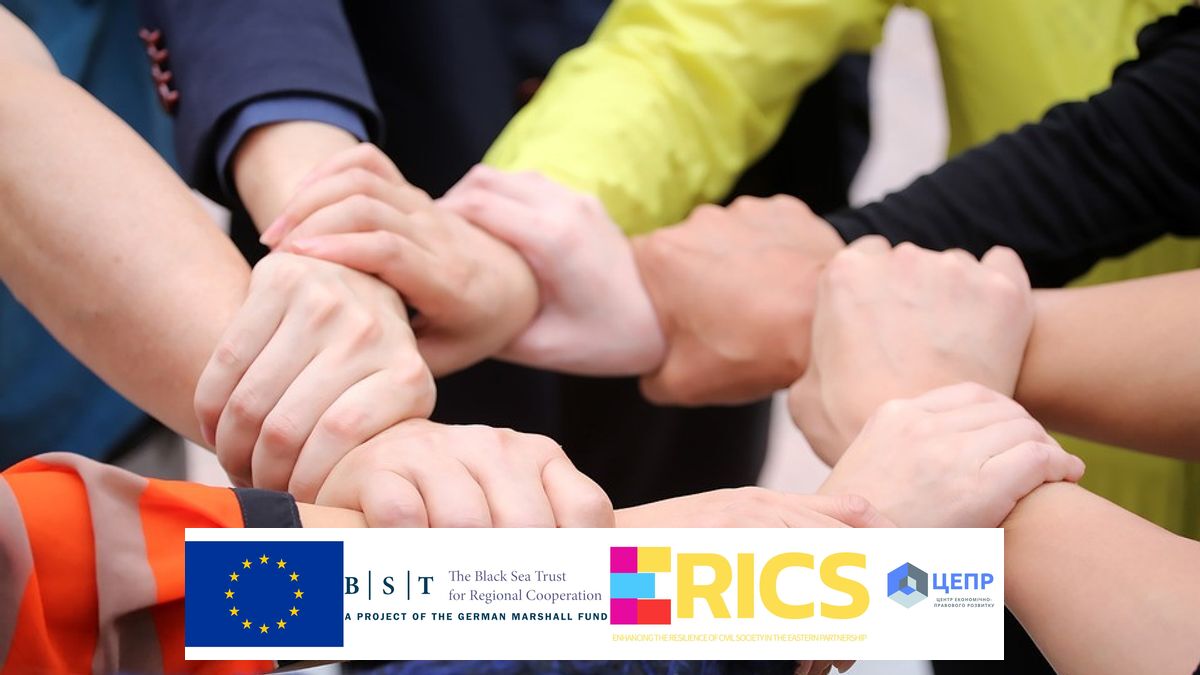
Regional cooperation is not just an opportunity but a necessity for the stability and prosperity of Eastern Europe and the Caucasus. The experience of Ukraine, Armenia, and Georgia proves: together, we are stronger.

{{current_weather.dt | momentjs( atts.date )}}
{{current_weather.temp | temp}} °{{units}}
{{day.dt | momentjs(atts.date)}}
{{day.temp | temp}} °{{day.temp_min | temp}} °{{units}}
Regional Cooperation as a Path to Stability and Prosperity: Success Stories from Ukraine, Armenia, and Georgia





The website was created with the financial support of the European Union and the Black Sea Trust for Regional Cooperation.

Discussion about this post