

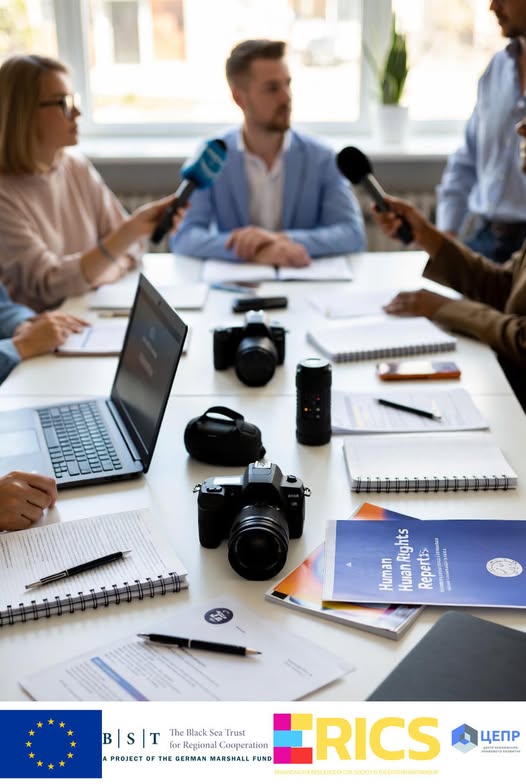
In a globalized world where challenges often ignore national borders, activists from different corners of the planet are increasingly coming together as a single learning community. The exchange of experiences between them has long ceased to be just formal summits; it is a permanent, dynamic ecosystem of mutual learning, where tactics, strategies and emotional support circulate at the speed of an Internet connection. This process is much deeper than simply copying successful cases. It is based on adaptation, critical understanding of the context and co-creation of new approaches. First of all, digital space has become the main arena for such exchange. Social networks, specialized platforms and closed chats allow for instant sharing of video instructions on safety at protests, templates of legal documents, successful campaigns on social networks or psychological practices of resilience. When activists in one country develop an effective tool for monitoring police violence, within a week its adapted versions can be tested on another continent. Importantly, digital connectivity overcomes isolation and provides a sense of belonging to a global movement.
However, the most important lessons are often not learned through screens, but through lived stories and informal connections. International networks and organizations that organize exchange programs, workshops, and internships play a key role here. An activist from a developing country can spend several months in Europe learning about lobbying, and then, upon returning home, not blindly import the model, but “winterize” it to the local realities of the political system and cultural peculiarities. Similarly, Western activists are increasingly traveling, for example, to countries of the Global South to learn how to work under severe resource constraints, to understand community organizing at a deep level, and to learn the methods of creative resistance that arise from the impossibility of using expensive technologies.
A critical element of learning is the analysis not only of successes, but also of mistakes. Progressive communities increasingly value frank discussions of failed campaigns, tactical failures, or internal conflicts. Such discussions, often held in trusted circles, help avoid repeating paths that have already proven dead ends for others. It is learning through shared vulnerability that builds deeper solidarity than simply celebrating victories together.
It is important to understand that effective exchange is not about importing ready-made solutions, but rather a process of “knowledge translocation.” Tactics of peaceful protest that are effective in one society may prove dangerous in another political regime. Therefore, the most valuable outcome of exchange is often not a specific tool, but the development of strategic thinking, the ability to analyze power lines in society, and the improvement of one’s own facilitation, communication, and movement-building skills. Activists learn not “what to do,” but “how to think” about their own struggles, while gaining an invaluable resource—a network of trusted allies around the world.
Thus, contemporary activism is a permanent global laboratory. From Kyiv’s Maidan to the protests in Hong Kong, from the environmental movements of Latin America to the fighters for racial equality in the United States, each struggle generates unique knowledge. Activists who are able to listen, adapt, and respect the context become true citizens of the world, collectively weaving the fabric of global change, thread by thread, experience by experience.

{{current_weather.dt | momentjs( atts.date )}}
{{current_weather.temp | temp}} °{{units}}
{{day.dt | momentjs(atts.date)}}
{{day.temp | temp}} °{{day.temp_min | temp}} °{{units}}
Sharing experiences: how do activists from different countries learn from each other?





The website was created with the financial support of the European Union and the Black Sea Trust for Regional Cooperation.

Discussion about this post