

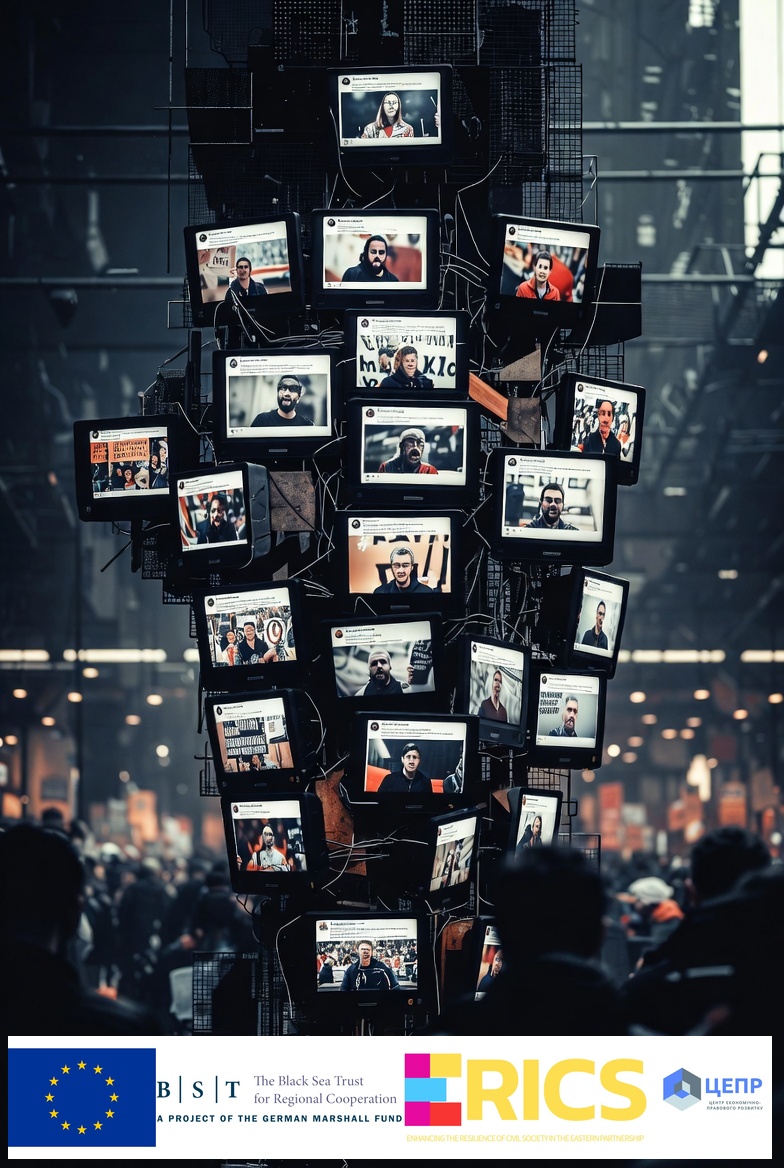
The Internet and social media have radically reshaped the political landscape, transforming traditional models of participation and communication. The public space is being democratized: while access to a broad audience was once largely the monopoly of political elites, the media, and major parties, today anyone with a smartphone can initiate discussions, mobilize individual support, or influence public opinion. Social media has become a powerful tool for political participation, manifesting itself in the organization of mass movements, coverage of protests, direct communication between citizens and the authorities, and in conducting entire campaigns that change public consciousness. One striking example is the #BlackLivesMatter movement, which originated in 2013 as a hashtag on Twitter in protest against police brutality. Social networks have made it possible to turn local incidents into a subject of global attention, coordinate mass actions around the world, and create a common identity for disparate activists. Viral videos, personal stories, and infographics made the complex issues of systemic racism accessible to millions, ultimately bringing the issue to a new level of public discussion and influencing political discourse in many countries.
In Ukraine, social media played a key role during the Revolution of Dignity of 2013-2014. When traditional media were partially censored or not operational enough, Facebook and Twitter became the main platforms for coordinating protesters on the Maidan, disseminating information in real time, debunking fake news, and organizing logistics (food and medicine deliveries). The hashtags #Euromaidan and #Maidan not only united participants in Ukraine, but also formed international solidarity. Later, after the start of Russian aggression, social media became a vital channel for spreading the truth about the events in Donbas and Crimea, as well as for volunteer initiatives to raise funds for the army.
Election campaigns, in particular, have seen social media become a major battleground. Barack Obama’s 2008 presidential campaign is considered a benchmark in the use of digital technologies to attract young voters, raise funds, and shape a positive narrative. But the real breakthrough came with the advent of platforms that allow for targeted advertising and micro-communication. Donald Trump’s 2016 campaign demonstrated how big data analytics from social media, combined with psychographic targeting, can influence voter sentiment in key states, often bypassing traditional media. This has sparked serious debates about ethics, manipulation, and protecting democratic processes in the digital age. In Europe, an example of a successful civic campaign powered by social media is the #MeToo initiative. Although the movement began in 2006, it was in 2017 that it exploded globally, thanks to Twitter, Facebook, and Instagram. Millions of women (and men) around the world shared their stories, uniting around the fight against sexual harassment. This campaign showed the power of a collective voice formed from below: it not only raised the issue, but also led to concrete political and legal consequences, changes in corporate policies and public attitudes in many countries. Thus, social media as a tool for political participation demonstrates a paradoxical duality. On the one hand, they promote inclusivity, transparency, mobilization and rapid self-organization of citizens. On the other hand, they carry the risks of spreading disinformation, creating “filter bubbles” that polarize society, and manipulation by both internal and external actors. However, despite all the challenges, social media has become an integral infrastructure of modern politics. It has transformed the passive consumer of information into an active participant who can not only observe but also initiate change, pressuring authorities and shaping new forms of collective action. The future of political participation will obviously be closely intertwined with the further evolution of digital platforms and society’s ability to use their potential constructively, while maintaining critical thinking and civic solidarity.

{{current_weather.dt | momentjs( atts.date )}}
{{current_weather.temp | temp}} °{{units}}
{{day.dt | momentjs(atts.date)}}
{{day.temp | temp}} °{{day.temp_min | temp}} °{{units}}
Social media as a tool for political participation: campaign examples




The website was created with the financial support of the European Union and the Black Sea Trust for Regional Cooperation.

Discussion about this post