

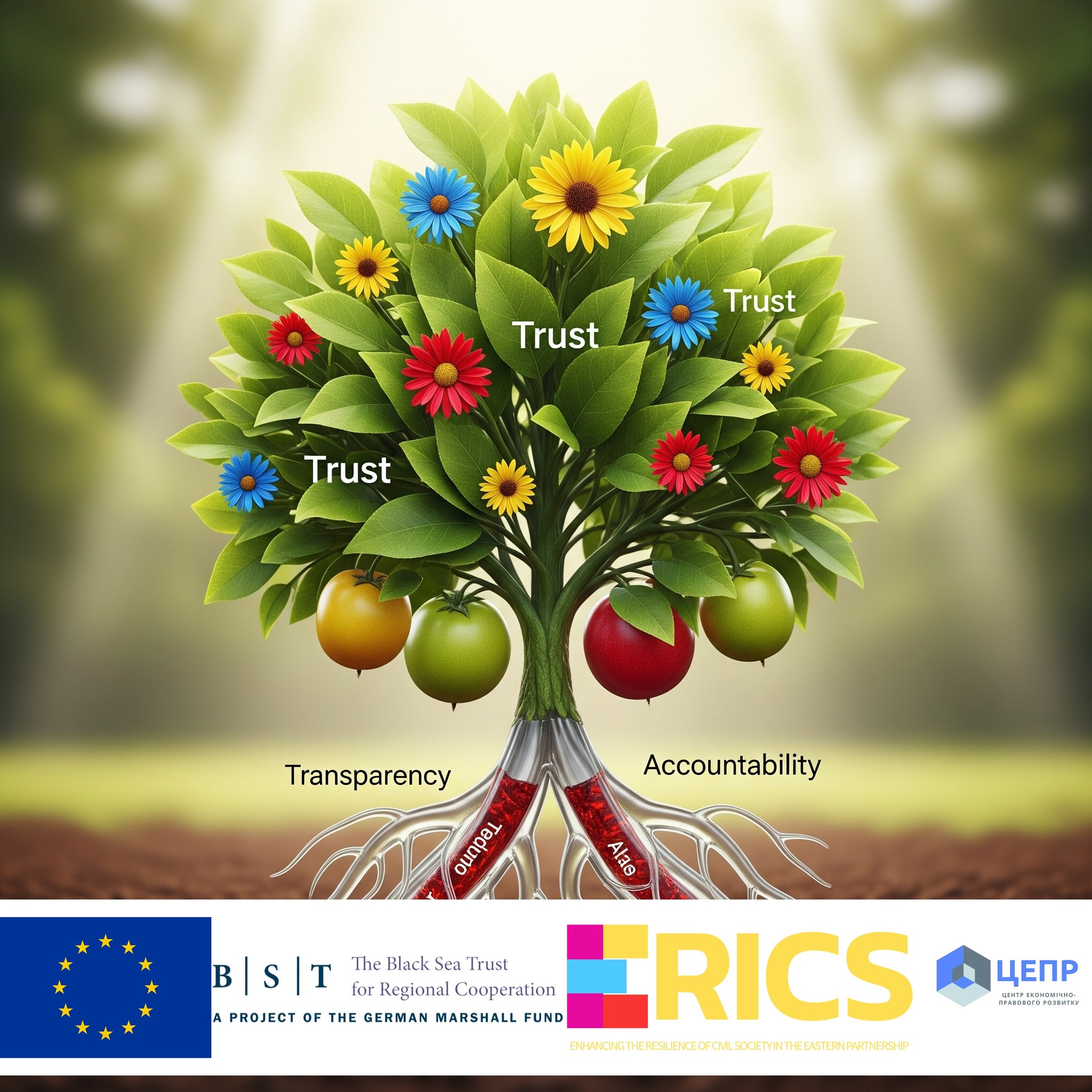
Civil society organizations (CSOs) play a crucial role in promoting democracy, human rights, and social development. However, their effectiveness depends on public trust, which is built on transparency and accountability. In post-Soviet countries like Ukraine, Armenia, Georgia, and Moldova, where corruption and weak governance have historically undermined confidence in institutions, ensuring CSO credibility is particularly important.
This article examines the challenges and best practices for enhancing transparency and accountability in CSOs across these four nations, highlighting key strategies to strengthen public trust.
1. The Importance of Transparency and Accountability
Transparency means openness in operations, funding, and decision-making, while accountability refers to the obligation to report and justify actions to stakeholders. For CSOs, these principles are essential because:
They ensure ethical use of donor funds.
They prevent conflicts of interest and corruption.
They enhance legitimacy and public support.
In Ukraine, Armenia, Georgia, and Moldova, where foreign funding is significant for many NGOs, transparency is often scrutinized by both governments and citizens.
2. Challenges in Ensuring CSO Transparency
A. Ukraine
Political polarization: Some CSOs are perceived as biased depending on their funding sources (Western vs. domestic).
Legislative pressure: Recent laws requiring NGO declarations of foreign funding have raised concerns about government overreach.
Public skepticism: Due to past corruption scandals, some Ukrainians distrust NGOs that lack clear financial disclosures.
B. Armenia
Post-revolution expectations: After the 2018 Velvet Revolution, CSOs faced higher scrutiny regarding their role in governance.
Foreign influence narratives: Pro-government groups sometimes label critical NGOs as “Western agents.”
Limited public engagement: Many Armenians are unaware of CSO activities, leading to low trust.
C. Georgia
Polarization and foreign agent laws: Proposed “foreign influence” laws (similar to Russia’s) have sparked debates about NGO transparency vs. government control.
Elite capture: Some CSOs are seen as too close to political elites, reducing their credibility.
Donor dependency: Overreliance on international funds raises questions about sustainability and independence.
D. Moldova
Corruption legacy: CSOs sometimes struggle to distance themselves from corrupt networks.
Weak self-regulation: The NGO sector lacks unified transparency standards.
Government mistrust: Previous administrations have targeted critical NGOs, undermining their legitimacy.
3. Strategies to Build Trust in CSOs
A. Strengthening Financial Transparency
Publicly disclose funding sources (e.g., through platforms like Ukraine’s ProZorro or Georgia’s Transparency Portal).
Adopt international standards (e.g., INGO Accountability Charter).
B. Enhancing Accountability Mechanisms
Independent audits to verify spending.
Stakeholder feedback systems (surveys, public hearings).
Whistleblower protections to encourage reporting of misconduct.
C. Improving Public Engagement
Regular reporting (annual reports, social media updates).
Community involvement (participatory budgeting, local partnerships).
Media collaboration to highlight CSO impact.
D. Advocating for Supportive Policies
Pushback against restrictive laws (e.g., Georgia’s civil society successfully resisted “foreign agent” legislation).
Lobby for tax incentives for transparent NGOs.
4. Success Stories
Ukraine: Anti-Corruption Action Center (AntAC) publishes detailed financial reports, boosting credibility.
Armenia: Transparency International Armenia uses open data tools to track public spending.
Georgia: Institute for Development of Freedom of Information (IDFI) promotes government accountability through FOI requests.
Moldova: WatchDog.md monitors public institutions, increasing NGO oversight.
5. Conclusion
For CSOs in Ukraine, Armenia, Georgia, and Moldova, building trust requires proactive transparency, strong accountability mechanisms, and meaningful public engagement. While challenges like political pressure and corruption persist, adopting best practices can strengthen civil society’s role as a pillar of democracy.
By embracing openness and demonstrating impact, CSOs can secure lasting public trust—essential for their sustainability and effectiveness in shaping these nations’ futures.

{{current_weather.dt | momentjs( atts.date )}}
{{current_weather.temp | temp}} °{{units}}
{{day.dt | momentjs(atts.date)}}
{{day.temp | temp}} °{{day.temp_min | temp}} °{{units}}
Transparency and Accountability of Civil Society Organizations: How to Build Trust? The Case of Ukraine, Armenia, Georgia, and Moldova





The website was created with the financial support of the European Union and the Black Sea Trust for Regional Cooperation.

Discussion about this post