

Civil society is one of the key drivers of democratic development in any country. However, its effectiveness directly depends on the trust of citizens, donors, and the state. The more transparency and accountability civil society organizations (CSOs) demonstrate, the greater their influence and the easier it is to attract resources.
In the context of Ukraine, Georgia, and Armenia, where the civil sector has been actively developing after revolutions and reforms, the issue of trust in CSOs remains relevant. How can it be earned?
Why Are Transparency and Accountability Important?
Public Trust – Citizens need to know how their donations or state funds are being used.
Operational Efficiency – Clear accountability mechanisms help prevent corruption and mismanagement.
International Support – Foreign donors are more likely to fund organizations with a good reputation.
How to Achieve Transparency? The Experience of Ukraine, Georgia, and Armenia
1. Open Finances
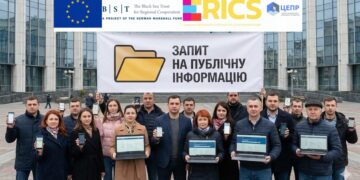
Ukraine: Since 2016, all CSOs receiving state funding are required to publish reports in the Unified Open Data Portal. The “Open Treasury” platform also monitors expenditures.
Georgia: Through transparency.ge, civil society organizations publish financial reports, allowing citizens to track their activities.
Armenia: After the 2018 revolution, the government introduced the e-gov.am system, where data on NGO funding can be found.
2. Public Reports and Social Media
Regular reports (annual, quarterly) on activities, expenditures, and achievements.
Video updates, infographics, live streams – as seen with Ukraine’s “Chesna Khata” or Georgia’s “Institute for Development of Freedom of Information” (IDFI).
3. Community Engagement
Public hearings (as in Armenia after 2018).
Online complaint platforms (e.g., Ukraine’s “Diia.OS”).
Collaborative projects with volunteers – this builds trust and engagement.
4. Independent Audits and Ethical Standards
Certification (e.g., ISO 26000 for social responsibility).
Cooperation with international networks (e.g., Transparency International).
Conclusion
Transparency and accountability are not just donor requirements but also tools for strengthening public trust. Ukraine, Georgia, and Armenia have already taken steps in this direction, but there is still room for improvement. The more openness CSOs demonstrate, the stronger their impact on society and state policy will be.

{{current_weather.dt | momentjs( atts.date )}}
{{current_weather.temp | temp}} °{{units}}
{{day.dt | momentjs(atts.date)}}
{{day.temp | temp}} °{{day.temp_min | temp}} °{{units}}
Transparency and Accountability of Civil Society Organizations: How to Build Trust? (The Experience of Ukraine, Georgia, and Armenia)


Freedom of Speech and the Role of Civil Society: Lessons from Ukraine, Georgia, Armenia, and Moldova




The website was created with the financial support of the European Union and the Black Sea Trust for Regional Cooperation.

Discussion about this post